Boundary Value: What London Families Really Pay for a School Postcode in 2026
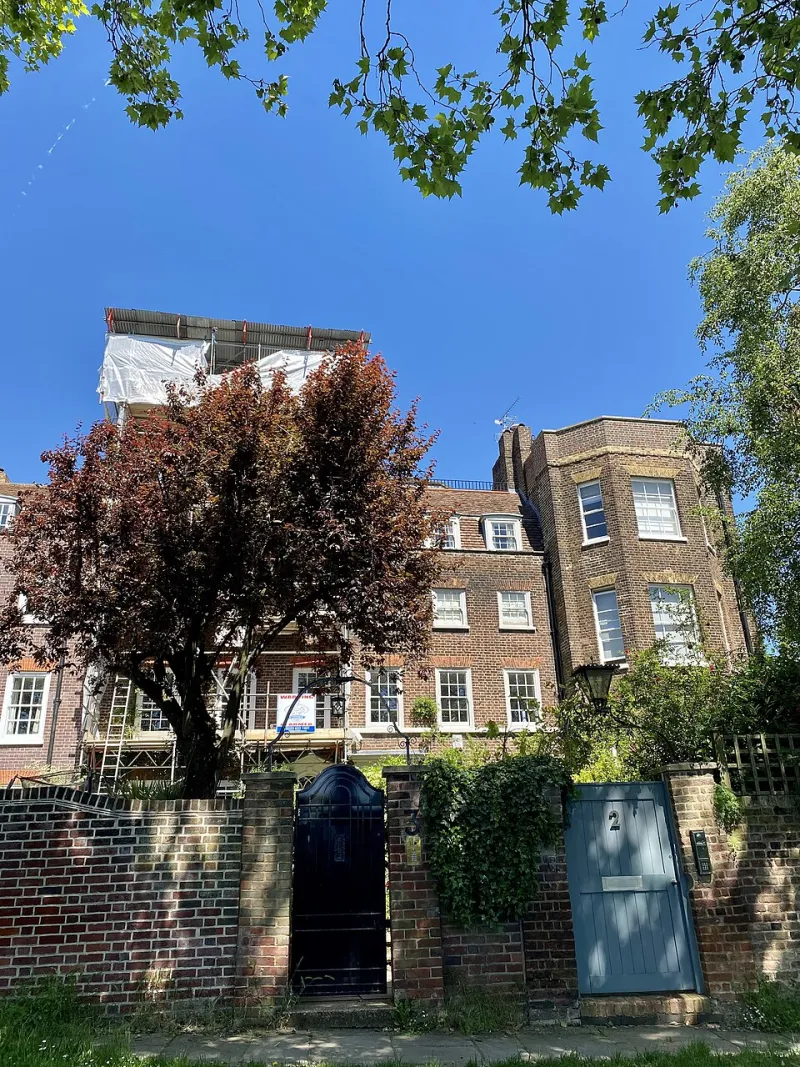
Photo: No Swan So Fine, CC BY-SA 4.0, via Wikimedia Commons
In London, the school gate can function as a price signal. A primary or secondary school with a short last-offer distance and a strong reputation does not merely attract applications; it can alter what families are willing to pay for a flat, a terraced house or a tenancy renewal. The effect is often described as a school premium, but that phrase suggests a single, stable number. The reality in 2026 is more complicated. What families are buying is not a guaranteed school place but a probability, and that probability is set by admissions criteria that can change from year to year.
A premium with no single price
Catchment areas are not fixed maps. For community schools, the relevant measure is usually the distance from the home address to the school, often calculated as a straight line rather than a walking route. For faith schools, priority may depend on religious practice and reference. For selective schools, entrance tests matter more than distance. Sibling rules, looked-after children, children of staff and banding arrangements can all sit ahead of proximity in the oversubscription criteria. Two streets that look equally close on a map can therefore carry very different admissions risk.
The last-offer distance published after a previous admissions round is a useful guide, not a forecast. In popular areas, that distance can contract sharply when a bulge class is removed, when a sibling cohort is unusually large or when new housing brings more families into the same few streets. Families who pay a premium for a postcode on the assumption that the boundary will stay put are taking on a risk that the housing market does not always price honestly.
What the 2026 admissions round shows
The 2026 offers are now known, and they confirm a pattern familiar to London admissions teams: the strongest price effects tend to appear where a school is both oversubscribed and tightly drawn, not simply where it performs well. A school with a wide draw across several neighbourhoods may be popular without creating a narrow catchment premium. A school with a short last-offer distance can generate intense competition for a small number of streets.
Advertised rents tell part of the story. In several boroughs, two-bedroom flats within a short walk of an oversubscribed primary school are marketed at a noticeable margin above similar stock fifteen or twenty minutes away. The gap is not uniform across London. It is shaped by local housing stock, transport links and whether the school is a primary or secondary. Secondary schools often have wider catchments and better transport access, which can dilute the effect on any one street. Primary schools, where younger children are less able to travel far, can produce sharper local premiums.
These figures should be read with caution. Advertised rents are asking prices, not completed lets. Price differences may reflect property condition, outdoor space, proximity to a station or simply the general reputation of a neighbourhood. The school premium is real in many cases, but it is rarely isolated from other advantages that a postcode already carries.
The rent ledger and the school gate
The effect is felt most acutely by private renters. An owner-occupier who pays more for a catchment address may at least be capitalising the premium into an asset. A renter pays the premium annually, with no equity and often with limited security. If the tenancy ends, the family can lose both the home and the school connection that justified the higher rent.
This is not a hypothetical concern. A family that moves into a rented flat to secure a primary place may face a renewal increase that pushes the rent beyond what they can sustain. A break clause, a landlord’s decision to sell or a rent review can all disrupt the calculation. For families with children already at the school, moving even a short distance can affect future sibling applications or in-year admissions. The catchment premium therefore carries a double risk: it is a housing cost and an admissions risk at the same time.
When housing and admissions policy pull apart
London’s housing policy and school admissions policy are not designed in the same room. Housing targets encourage new homes, including family-sized homes, in areas with good transport and existing services. Admissions policy prioritises proximity, siblings and sometimes faith. When new family homes are built near an already oversubscribed school, the result can be more competition for the same last-offer distance. Families in temporary accommodation may face particular difficulty, because their address can change while they wait for a settled home.
The mismatch is not anyone’s single decision. It is a structural feature of a city where good schools are unevenly distributed and where housing costs are high. But it matters for affordability. A school premium is a housing cost that is rarely counted in housing policy, and an admissions pressure that is rarely counted in school planning. Families experience both at once.
Navigating the boundary without overstretching
For families considering a move, the practical task is to separate the school premium from the rest of the housing decision. Start with the school’s published admissions criteria for the relevant entry year, not a summary from a forum or an estate agent. Check how distance is measured, whether siblings have priority, whether faith or banding applies and how many places were offered in recent years. Last-offer distances should be compared across at least three admissions rounds where possible, and treated as a range rather than a guarantee.
Renters should examine tenancy length, break clauses and rent review terms before signing. A two-year tenancy with a fixed rent may offer more stability than a cheaper flat with a six-month break clause. Families should also test the commute and the school run in real conditions. A address that looks close to the school gate may be less practical if the walking route is poor or the journey depends on a bus that is already full.
It is also worth checking in-year admissions arrangements and local authority advice before assuming that a move will produce a place. A postcode is not a school place. The most affordable decision is often the one that leaves room for the boundary to move without forcing another move.
A boundary, not a guarantee
The catchment premium is a genuine feature of London’s housing market in 2026. It is also an unstable one. Families pay for proximity, but proximity is only one line in an admissions code. Until housing and school planning are read together, the school gate will continue to set rents quietly, and some London families will continue to pay for a boundary that was never theirs to keep.