The Vacancy Surcharge Test: Auditing London’s Empty-Home Premium in 2026
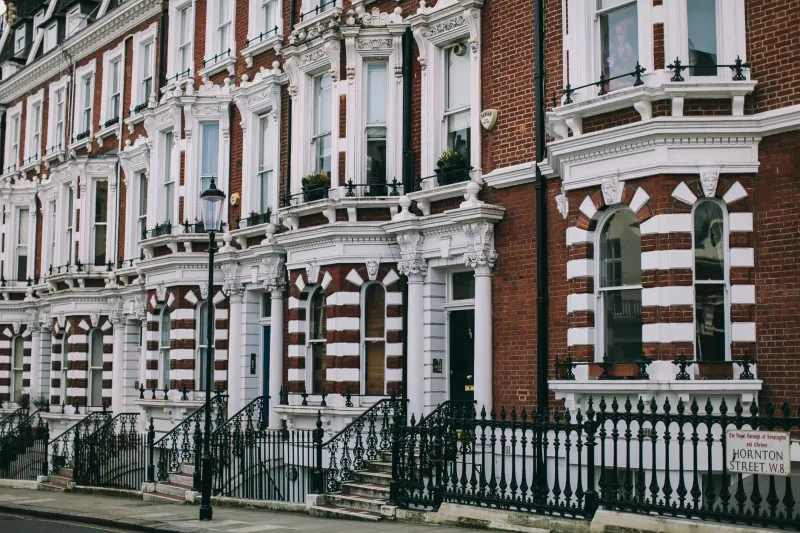
In a city where housing pressure is measured in waiting lists and temporary-accommodation bills, an empty home is both a practical waste and a political symbol. By 2026, London councils have been using higher council tax premiums on long-term empty and second homes for several years. The policy is now familiar. The harder question is less familiar: where does the money go, and what evidence is there that it is changing the shape of London’s housing market?
What the premium is—and is not
A council tax premium is not a new tax. It is a multiplier applied to an existing bill. In England, the long-term empty-homes premium has been available for properties empty for more than a year, with higher multipliers after five and ten years, while the second-homes premium reached 100 per cent from April 2025. By 2026, several London boroughs have adopted the full second-home premium and are reviewing how far to go on empty homes.
The arithmetic is simple. A Band D second home in an inner-London borough might carry an annual council tax bill of roughly £1,700 before any premium. A 100 per cent premium doubles that. For the owner of a high-value property held as an investment, the surcharge may be unwelcome but manageable. For a borough, the aggregate receipts can be material. For a neighbourhood, however, the test is not the size of the bill but whether the property returns to use.
The premium also has boundaries. Probate, renovation, job-related requirements and other exemptions can limit its reach. The definition of a second home for council tax is not identical to the public intuition of a “ghost home.” A flat used occasionally by an owner who works abroad may be captured; a property left empty within the rules may not be. Any audit of the policy must begin with those boundaries rather than with the headline multiplier.
Where the surcharge falls
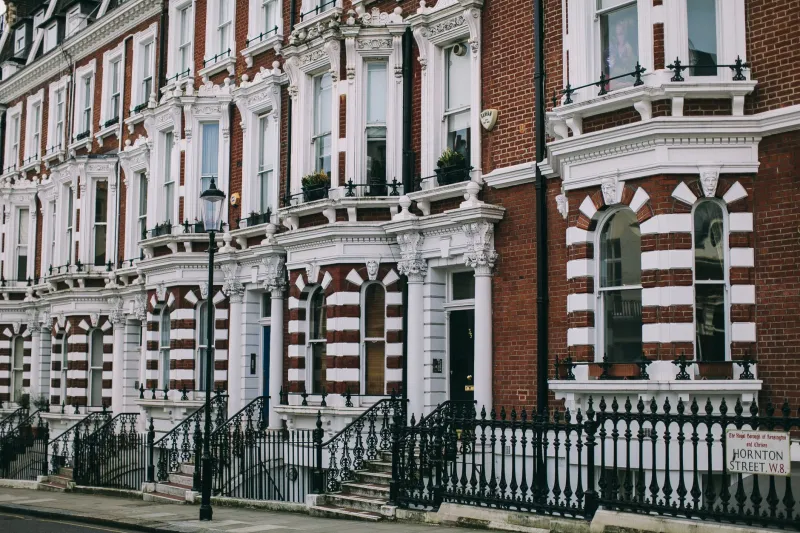
Second-home concentrations are not evenly spread across London. They cluster in Westminster, Kensington and Chelsea, Camden and parts of Richmond, where prime property, international ownership and short-term letting pressure overlap. Long-term empty homes are more dispersed. Pockets appear in outer boroughs, above commercial premises, in leasehold blocks awaiting repair, and in estates where probate or ownership disputes delay reuse.
That geography matters because council tax is collected borough by borough, while affordable housing need is citywide. A borough with a large second-home stock may collect substantial premium income without having the land, pipeline or political priority to convert that income into new social rent. A borough with fewer second homes but severe temporary-accommodation pressure may collect less. The premium therefore risks being fiscally strongest where the housing need is not always most acute, and fiscally weakest where delivery capacity is thin.
There is also a distributional question. The surcharge falls on property wealth, which is progressive in one sense. But it can affect leaseholders in blocks with complex ownership, family estates in probate, and older owners in homes that are empty for reasons other than investment. A well-designed policy should distinguish between speculative vacancy and unavoidable delay. A blunt multiplier does not always make that distinction.
The ring-fencing question
Central government has not required councils to ring-fence premium income for affordable housing. Some boroughs publish commitments; others fold the receipts into the collection fund and general budget. That is legally understandable. Council budgets are under pressure across social care, waste, transport and temporary accommodation. But it makes the housing claim harder to verify.
In 2026, residents and councillors should ask three questions of every borough. First, what is the baseline? How many long-term empty and second homes were recorded before the premium, and how many are recorded now? Second, what is the allocation? How much premium income was collected, and what share was explicitly committed to affordable housing, empty-homes officers or acquisition? Third, what is the delivery? How many homes were brought back into use, and how many of those are affordable at social rent or London Affordable Rent levels?
Without those answers, the premium becomes a budget line rather than a housing policy. A receipt that funds temporary accommodation is not nothing. It may keep a family in a room. But it is not new supply, and it does not reverse the hollowing-out of a street where lights stay off and bins go unemptied.
The hollowed-out street
The community impact of vacancy is quieter than a waiting-list statistic. A second home that is rarely occupied may still pay council tax, but it does not use the local school, the GP surgery or the bus. A long-term empty house can become a visible sign of neglect. On high streets, the loss of permanent residents weakens the case for the bakery, the pharmacy and the evening bus. The premium does not repair that social fabric by itself.
Nor does it always change owner behaviour. An annual surcharge can be absorbed into the carrying cost of an asset whose value is expected to rise. Where the owner is overseas or the property is held through a company, enforcement can be slow. Councils need empty-homes officers, data-sharing and legal capacity to make the premium bite. Those resources cost money, which is another reason the receipts should be transparent.
A better test for 2026
The vacancy surcharge is a reasonable lever. It signals that keeping a home empty in a housing crisis has a cost. But it should be judged by outcomes, not by the elegance of the multiplier. London needs ward-level vacancy counts, published premium receipts, clear allocations to affordable housing, and annual reporting on homes returned to use. Where a borough cannot ring-fence the money, it should at least explain what the premium has displaced or funded.
The ghost home premium should not become a ghost housing policy. In 2026, the question is not whether London councils can post a higher bill. It is whether the keys turn, the lights come on, and the receipts build homes that Londoners can actually afford.