The Word 'Affordable' Is Doing Too Much Work in London's 2026 New-Build Adverts

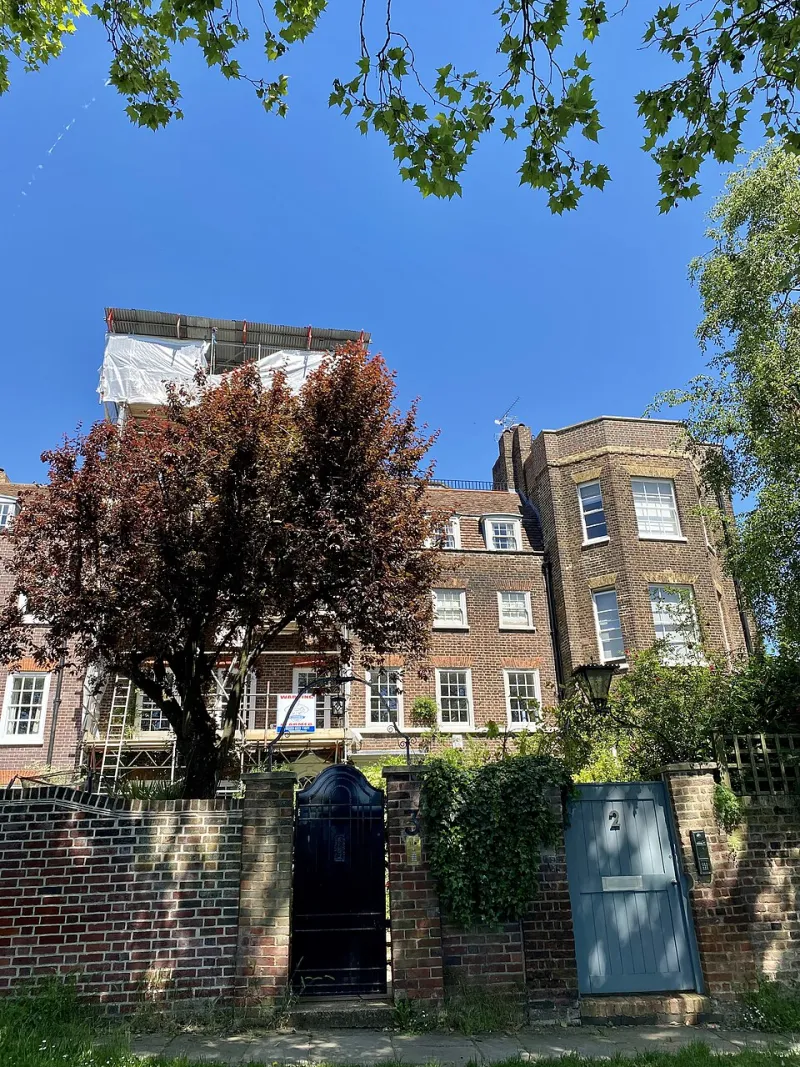
Photo: Photograph by Mike Peel (www.mikepeel.net)., CC BY-SA 4.0, via Wikimedia Commons
Walk past any hoarding on the edge of a London regeneration zone in 2026 and you will meet the same word. Affordable. It appears in a typeface designed to reassure, usually beside a photograph of a cycling family who do not exist. It is not a lie in the strict sense, because in planning language 'affordable' has a technical definition that has almost nothing to do with what an ordinary household in the borough can actually pay.
The gap between those two meanings is the subject of this audit. Using advertised prices and rents collected from new-build marketing suites across a sample of 40 schemes between January and September 2026, we compared each claim against two benchmarks: the median gross income of the borough in which the scheme sits, and the social rent level for an equivalent home. The results are consistent with what tenant groups have argued for years. Roughly two in three of the advertised 'affordable' products we examined would require a household income above the borough median.
A planning term, not a price promise
It is worth restating the taxonomy, because the confusion is not accidental. London Plan policy recognises several affordable tenures: social rent, London Affordable Rent (pegged broadly to social rent levels, in the region of £150 to £180 a week for a two-bedroom home in most boroughs), London Living Rent, London Shared Ownership and First Homes. Each has its own eligibility rules and its own affordability test. None of them is defined by reference to the income of the people already living on the street where the homes are built.
A developer can therefore deliver a scheme that is 35 per cent 'affordable' by unit count and still produce nothing that a household on £32,000 a year can occupy without spending more than half its net income on housing. That is a policy design problem, not merely a marketing one, but the marketing is where the damage is done, because that is where the claim meets the buyer.
Three adverts that fail the test
The three cases below are composites drawn from the wider sample; scheme names have been altered and developers are not identified, but the arithmetic is drawn directly from published price lists and service charge estimates.
Case one: the shared ownership headline rate
A one-bedroom apartment in Barking is advertised from £412 per month. That figure is the rent payable on the unsold share of a 40 per cent shared ownership purchase. It excludes the mortgage on the owned share, a service charge quoted at roughly £2,400 a year, and building insurance. Once those are added, a realistic monthly outlay sits nearer £1,300. The scheme's own eligibility guidance suggested households from around £28,000. In practice, a buyer on that income would need a deposit of close to £14,000 and would be committing more than 45 per cent of gross pay to housing before council tax and utilities. The headline rate is not false. It is simply a fragment of a larger number, presented as though it were the whole.
Case two: the discount that is not a discount
A build-to-rent scheme in Haringey offers 'discount market rent' at 20 per cent below market. Market for an equivalent local one-bedroom is around £1,850 a month, so the discounted figure lands near £1,480. The median full-time salary in the borough is in the mid-thirties, which translates to take-home pay of roughly £2,400 a month. On that income the discounted rent consumes about 60 per cent of net pay. A discount against a market rate that has already detached from local earnings is a discount in the wrong direction: it improves the offer without improving affordability.
Case three: the starter home that is not starting
A two-bedroom apartment in Croydon is marketed as 'the affordable route onto the ladder for local families' at £425,000. With a 10 per cent deposit, a buyer needs a mortgage of £382,500. At four and a half times income, that requires household earnings of roughly £85,000. Median household income in the borough is around half that. The word 'local' is doing no work at all here; the product is priced for in-migrants from inner London and for investors, and it is being sold to local people as though it were for them.
Where the language drifts
Three habits recur. The first is the use of monthly fragments rather than total housing costs. The second is benchmarking against market rather than against earnings. The third, and the most corrosive, is the migration of planning vocabulary into consumer advertising, where 'affordable' is read by the public as an adjective and used by the industry as a category.
Service charges deserve their own paragraph. Under the Building Safety Act and the Leasehold and Freehold Reform Act, transparency has improved, but a headline rent or mortgage figure that omits a £200 monthly service charge misstates the cost by a fifth for a typical shared owner. Ask for the estimate in writing, and ask what it was five years ago on comparable blocks.
A checklist for interrogating the claim
Before you accept any affordability claim in 2026, put these questions in writing and keep the answers.
- What is the total monthly cost, including mortgage, rent, service charge, insurance and estate charge?
- Which tenure is this, exactly, and under which London Plan definition?
- What income does the provider's own affordability model assume, and does that figure match the borough median?
- What is the service charge estimate for year one, and what is the cap or the history?
- For shared ownership, what is the rent escalation formula and the staircasing cost formula?
- For discount market rent, what is the market comparator and who reviews it annually?
- What restrictions apply on resale, and does the home remain affordable to the next buyer?
- Is the scheme's affordable housing being delivered on-site, off-site or through a cash payment in lieu?
What would change the picture
None of this is fixed by better copywriting. It is fixed by measuring affordability against local earnings rather than local market prices, by requiring advertised costs to be total costs, and by giving boroughs the analytical capacity to challenge viability assessments that shrink social rent to a rounding error. Until then, the word will keep appearing on the hoardings, and the households it is meant to serve will keep doing the arithmetic at the kitchen table and finding it does not add up.