Beyond the Deposit: The Informal Upfront Fees Creeping Back Into London Lettings
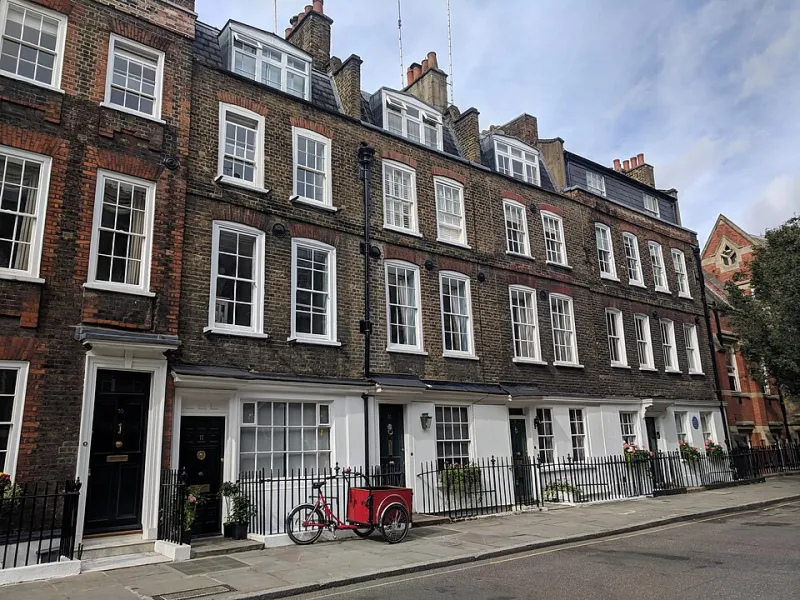
Photo: Richard Symonds, CC BY-SA 4.0, via Wikimedia Commons
For London renters, the affordability question rarely ends at the headline rent. There is the deposit, the first month’s payment, the cost of moving, and then — increasingly — a cluster of smaller charges that appear before a tenancy has even begun. A ‘referencing administration’ fee here, an ‘inventory setup’ charge there, an informal holding payment requested by message: none is large on its own, but together they form a familiar pattern. In 2026, that pattern deserves closer scrutiny.
The Viewing-Room Add-On
The Tenant Fees Act 2019 was intended to draw a clear line. In England, a landlord or letting agent cannot require a tenant to pay anything other than a permitted payment. Referencing fees, administration fees, inventory fees, check-in fees and guarantor fees are not permitted. Yet a mystery-shop review of advertised listings and follow-up enquiries across several London boroughs — including Hackney, Haringey, Newham, Lambeth and Croydon — suggests that the line is not always being observed in practice.
The charges are rarely presented as bold line items. They surface in WhatsApp messages after a viewing, in a ‘pre-application’ email, or in a breakdown sent only once a renter has expressed interest. One listing in Haringey asked for a ‘referencing and compliance contribution’ before a viewing could be booked. An agent in Newham described a ‘holding payment’ that would be ‘offset against the first month’ but could not explain the refund terms. In Lambeth, a renter was told that an ‘inventory and check-in’ charge would be payable on the day the keys were collected. Each request was small enough to seem administrative rather than objectionable. Each was also, on the face of it, a prohibited payment if it was a condition of the tenancy.
This is the quiet return of what was once called key money: an upfront sum, dressed as process, that a renter feels unable to refuse. The label changes; the pressure does not.
What the Law Permits
The legal position is not ambiguous. Under the Tenant Fees Act 2019, permitted payments include rent, a refundable tenancy deposit capped at five weeks’ rent where the annual rent is below £50,000, a refundable holding deposit capped at one week’s rent, and payments for utilities, council tax, television licence and communications services. A landlord may also charge a late rent fee after 14 days of arrears, a reasonable charge for replacing lost keys, a capped fee for varying or assigning a tenancy, and an early-termination payment if the tenant requests it. Anything else required in connection with the tenancy is generally prohibited.
A holding deposit is lawful only if it is refundable and capped at one week’s rent. It can be retained only in limited circumstances — for example, where the tenant provides false or misleading information, fails a right-to-rent check, withdraws, or fails to take reasonable steps to enter the tenancy within the agreed period. An informal ‘holding payment’ that is not treated as a holding deposit, or that comes with vague refund terms, is a different matter. So is an ‘administration’ charge by another name.
Why Small Fees Matter
The temptation is to treat these sums as trivial. A £60 charge or a £120 ‘setup contribution’ may seem minor beside a deposit of £1,500 or a monthly rent of £1,800. But affordability is not only a function of large numbers. It is a function of timing and cash flow. At the point of moving, renters are already carrying the deposit, the first month’s rent, removal costs, and often a gap between tenancies. Small charges arrive when the household has least flexibility to absorb them.
They also distort comparison. A listing advertised at £1,750 a month may effectively cost more once a ‘referencing’ fee and a ‘check-in’ fee are added. For renters weighing two properties, the headline rent is visible; the informal add-ons are not. That asymmetry matters in a market where competition for well-priced homes remains intense. When a renter is told that a payment is ‘standard’ or that ‘everyone does it’, the cost of disagreeing can feel higher than the cost of paying.
The Mystery-Shop Pattern
In a small mystery-shop exercise for this article, the pattern was consistent in tone rather than in amount. Charges were rarely included in the advertised rent. They were introduced later, often verbally or in a direct message. Some agents described them as ‘third-party costs’ — a framing that does not change the legal position if the payment is required in connection with the tenancy. Others framed them as optional, but then suggested that an application would not proceed without them. That distinction between optional and expected is precisely where enforcement becomes difficult.
The sums observed ranged from modest to meaningful: a ‘referencing’ request of £75, an ‘inventory setup’ request of £90, a ‘check-in’ charge of £120, and a holding payment of £300 described as ‘part of the first month’. None was presented as a deposit. None came with a written refund policy. These are not life-changing amounts in isolation. Across a move, they can approach several hundred pounds — a sum that might otherwise cover a week of commuting, a utility bill, or the difference between a cramped search and a viable one.
A Practical Ledger for Renters
The first defence is a written breakdown. Before paying anything, renters should ask for a full schedule of payments in writing, identifying what each sum is for and whether it is refundable. A lawful holding deposit should be clearly labelled, capped at one week’s rent, and accompanied by terms explaining when it can be retained. A deposit should be protected in a government-approved scheme within 30 days. Charges described as ‘administration’, ‘referencing’, ‘inventory’, ‘check-in’ or ‘guarantor processing’ should prompt a question: is this payment required in connection with the tenancy? If so, it is likely prohibited.
Renters should keep a record of messages, listings and receipts. Where a prohibited fee is demanded, they can raise it with the agent or landlord in writing, refer the matter to the local authority trading standards team, and use the redress scheme to which the agent belongs. Paying under protest is sometimes unavoidable, but it should be documented. The point is not to turn every £60 charge into a dispute; it is to make clear that the legal boundary has not moved.
Enforcement and Transparency
The deeper issue is enforcement. Local authorities have powers to fine landlords and agents for taking prohibited payments, but resources are stretched and individual sums are small. Many renters do not know the rules, or do not believe a challenge is worth the risk. That is why transparency at the listing stage matters. Adverts should state the rent, the deposit and any permitted holding deposit clearly. They should not leave room for a later ‘setup’ conversation.
For London’s housing debate, the lesson is familiar. Affordability is not captured by rent alone. It is captured by the sequence of payments a household must make before it can call a place home. In 2026, the informal upfront fee is a small but revealing part of that sequence. It tests not only a renter’s budget, but also the strength of the rules meant to protect it.