The Hidden Waterline: Why Flood Insurance Is Becoming London’s Quiet Affordability Test
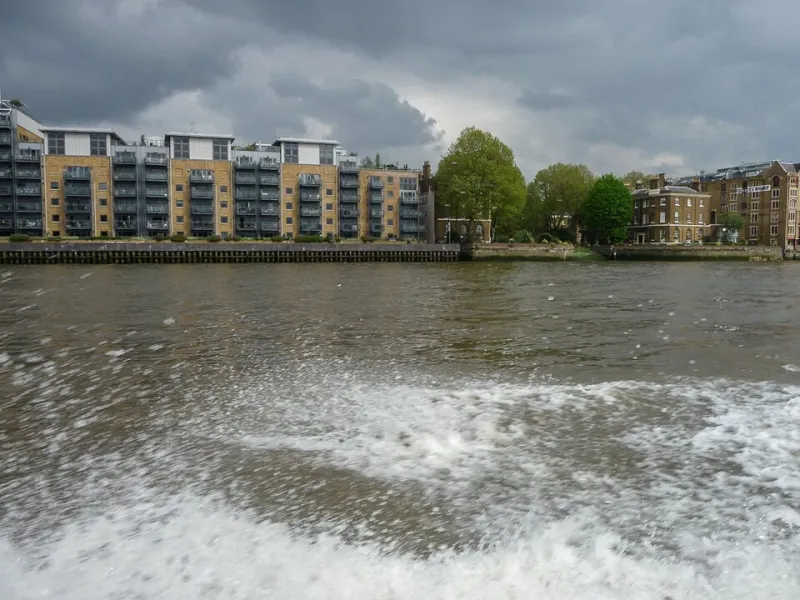
Photo: Christine Matthews , CC BY-SA 2.0, via Wikimedia Commons
An asking price can look reasonable until the insurance quote arrives. Across parts of London, the gap between a home’s headline price and its true annual cost is being widened by flood risk. In 2026, the affordability map is not drawn only by rents, mortgage rates and travel zones. It is also being redrawn by water.
The premium that behaves like a second mortgage
Flood cover has become one of the least visible costs in London housing. For owners, it can arrive as a condition of the mortgage: lenders generally expect adequate buildings insurance, and a policy that excludes flood damage may not satisfy that expectation. For leaseholders, the cost is often buried in the service charge, where buildings insurance is arranged collectively. For renters, it is even less visible, recovered through service charges or absorbed into rent without ever appearing as a separate line on a tenancy agreement.
The result is a quiet affordability test. A flat in a riverside regeneration scheme may be marketed at a discount to its inland neighbour, but the saving can be eroded by a premium that reflects flood probability, rebuild cost and the insurer’s view of future climate exposure. Brokers describe quotes in some London postcodes at several times the typical buildings premium, with excesses that can run into five figures for flood damage. Those figures do not appear in the estate agent’s window.
Environment Agency flood maps provide the first clue, but they are not the whole story. Fluvial and tidal flood zones show where rivers and the Thames are most likely to overflow. Surface-water risk — the flash flooding that follows intense rainfall — can sit outside those zones and still affect premiums, basements and ground-floor flats. Insurers increasingly price both. The practical question for a buyer is not simply whether a home is in a flood zone, but what the insurer will charge, what the policy will exclude and whether a lender will accept it.
Where the waterline meets the borough boundary
The pattern is uneven. Parts of the lower Lea Valley, Thamesmead, Barking Riverside, the Wandle Valley and sections of Kingston and Richmond carry different combinations of tidal, fluvial and surface-water risk. Some are areas of active regeneration, where new homes sit alongside ageing drainage and industrial land. Others are established neighbourhoods where a single street can differ from the next because of ground level, basement depth or the age of the sewer network.
That street-level variation matters because housing markets price in broad strokes. A buyer may see a postcode average and assume the risk is manageable. A lender’s valuer may take a more granular view. An insurer may take a more granular view still. The result can be a chain of conditional decisions: a mortgage offer that depends on cover, a cover quote that depends on an excess, and an excess that changes the buyer’s monthly budget.
For renters, the same geography can produce a different kind of hidden cost. A landlord’s buildings insurance is recovered through the service charge in many blocks. If the premium rises sharply, the charge rises with it. Contents insurance is optional for many tenants, but the risk of losing possessions to a flood is not. In lower-income households, the choice between contents cover and other essentials is not a neutral one.
The renter’s invisible bill
Renters rarely see the buildings insurance policy for the home they live in. They may not know whether flood damage is covered, whether the excess is affordable for the landlord, or whether a claim would lead to a dispute about repairs and rehousing. In a rental market already stretched by deposit and guarantor requirements, this is a significant information gap.
A renter considering a ground-floor flat in a riverside block should be able to ask three questions before signing: is the building insured for flood damage, what is the excess, and who is responsible for temporary accommodation if the property becomes uninhabitable? At present, those answers are not standard. They should be.
Lenders, valuers and the mortgageability test
Lenders are not refusing to lend across London’s flood-exposed neighbourhoods. But climate-risk rules are changing the terms on which lending happens. Valuation guidance now commonly asks valuers to note flood risk and insurance availability. A mortgage offer may be conditional on adequate cover being maintained for the life of the loan. For older properties with basements or commercial units below, the conditions can be more onerous.
This is not a reason to write off riverside living. It is a reason to price it honestly. A home that is affordable at the point of purchase but unaffordable at renewal is not truly affordable. A rental that is cheap in month one but carries a service-charge spike after a flood event is not stable housing.
What should be disclosed before keys change hands
If climate risk is now part of housing affordability, disclosure should follow. Councils, developers and landlords should be required to provide a short, standard flood-risk and insurance schedule at the point a property is listed or a tenancy is advertised. It should state the Environment Agency flood zone, known surface-water risk, the latest buildings insurance premium and excess, any flood-related conditions or exclusions, and the claims history available for the building.
For new-builds, developers should publish the same information before reservations are taken, not after. For rentals, landlords and letting agents should provide the buildings insurance summary alongside the energy performance certificate and the deposit paperwork. None of this replaces a survey or independent advice. It simply makes the invisible bill visible.
The flood-premium postcode is not a warning to avoid London’s rivers. It is a call to treat water as a housing cost. Until insurance, excesses and lender conditions sit alongside rent and mortgage payments in the affordability ledger, buyers and renters will keep discovering the bill after the keys have changed hands.