Where the Children Actually Play: Auditing Family Space in London’s New-Build Estates
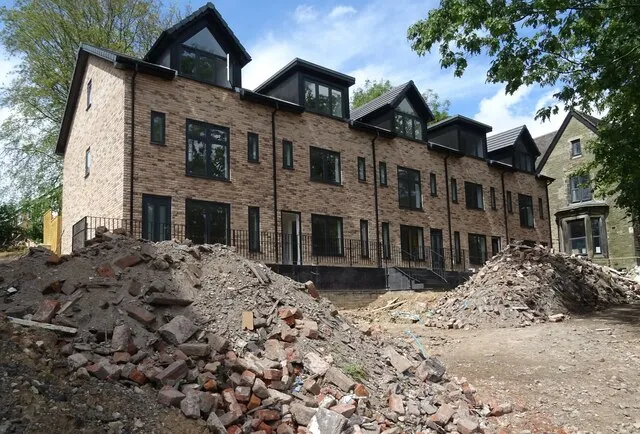
Photo: JThomas , CC BY-SA 2.0, via Wikimedia Commons
A family looking for a two-bedroom flat in London is often told to prioritise space. The advice is sound but incomplete. Space inside the home is only part of the affordability equation. The other part is what a child can reach without a car, a paid activity or a long walk along a busy road. In new-build family developments, that second part is frequently promised in a render and delivered as a courtyard with a locked gate and a sign about ball games.
What counts as play space
Play space is not simply grass. It is space a child can use safely and independently: a doorstep play area for younger children, a courtyard with seating and sightlines, a equipped playground, a multi-use games area, or a safe route to a public park. The London Plan’s play policy and associated guidance ask developers to assess the child population likely to live in a scheme and to make provision for play and informal recreation. A common benchmark in that guidance is around ten square metres of play space per child, though the quality and accessibility of the space matter as much as the number.
The audit question for renters and buyers is therefore not ‘does the scheme have a play area?’ It is ‘how much of it is usable, by whom, at what hours, and under what management rules?’ A podium garden may look generous in a brochure but be overlooked, windy or reserved for residents only. A courtyard may be landscaped but too small for running. A playground may exist but be locked outside office hours.
The marketing gap
New-build marketing tends to show play space at its best: wide angles, soft lighting, children on scooters and adults on benches. The completed scheme may be more modest. Equipment can be reduced during value engineering. A lawn can become a planting bed. A communal garden can be transferred to a management company with rules that forbid scooters, balls or picnics. None of this is necessarily a planning breach, but it changes what a family is buying or renting.
Family affordability is also affected by bedroom size. A two-bedroom flat with a second bedroom too small for a child’s bed and desk is not a family home, whatever the floor plan says. When internal space is tight, the pressure moves outside. If outside space is also constrained, the family pays in other ways: paid soft play, clubs, travel and time.
The three-part test
A useful audit has three parts. First, quantity: how many square metres of play space are provided, and for how many children? Second, quality: is the space safe, overlooked, sunny, quiet enough, and equipped for different ages? Third, access: is it free, public or resident-only, open at reasonable hours, and reachable without crossing a dangerous road? A scheme can pass on quantity and fail on access.
Renters should also check the management plan. Who maintains the play area? Are there restrictions on use? Can residents book it for private events? Is there a service charge for it? For buyers, the estate management charge may include play space maintenance for years. For tenants, the relevant question is whether the space is genuinely part of the tenancy or merely part of the landscaping.
Questions for viewings and planning files
At a viewing, visit at different times of day. Look for signs, locks and management notices. Ask the agent for the play strategy or landscape plan, and check the local planning portal for the approved drawings. Ask how many children are expected in the scheme and whether the play space was sized for them. Ask whether the space is public or private, and whether access can be changed later.
A family should also ask about the route to the nearest public park. A small courtyard is more valuable if it connects safely to a larger green space. A development that provides neither is asking families to absorb a cost that does not appear in the rent.
Counting what families need
London needs family homes, but it also needs the spaces that make family life work. A child-friendly new-build is not a luxury product; it is basic community infrastructure. If affordability is measured only by rent and bedroom count, the ledger will keep missing the playground. In 2026, the better test is simple: can a child step outside and play without a booking, a gate code or a car journey? If the answer is no, the scheme is not as family-friendly as the brochure suggests.